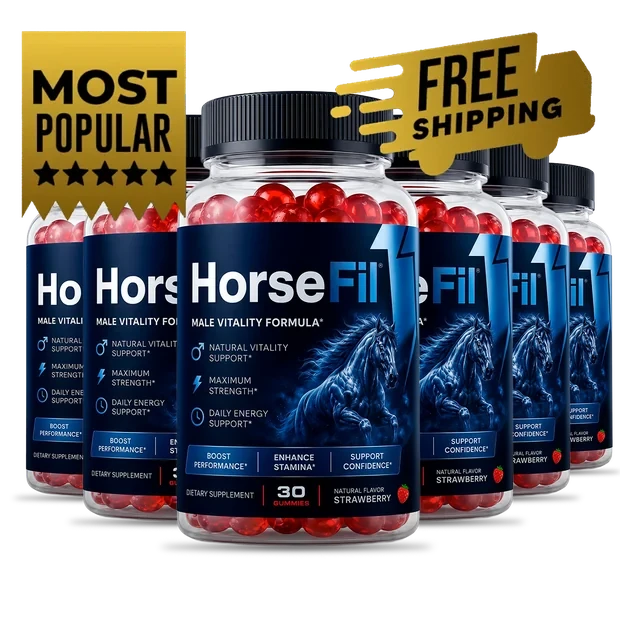
Seven advertised benefits, each rated against what published research on the ingredients actually supports — plus the side effects and interactions worth knowing.
Supplement benefit lists tend to be written by marketers. This one is graded. For each advertised benefit we state what the manufacturer claims, then what the evidence on the relevant ingredients actually supports — including where it does not.
Evidence grade: moderate, population-dependent.
Tongkat Ali carries this claim and has genuine trial data behind it. The important qualification is who those trials studied: men with low baseline testosterone, older men, and men under sustained physical stress. In those groups, modest increases in free testosterone have been observed.
If your testosterone is already in the normal range, expect considerably less. And to be direct about scale — no botanical produces changes comparable to medical hormone therapy. If you suspect clinically low testosterone, that needs a blood test and a doctor, not a gummy.
Evidence grade: strong for the ingredient, unknown for this product.
Beet root nitrate has solid, replicated evidence for improving exercise economy — the same effort costs less oxygen, so you last longer. This is one of the better-established findings in sports nutrition.
The qualifier is dosage. The trials use concentrated nitrate shots. Whether a gummy delivers anything comparable is the open question that runs through this entire product.
Evidence grade: sound mechanism, dosage-dependent.
Covering both nitric oxide pathways — L-Arginine as direct precursor, dietary nitrate as the alternative route — is thoughtful formulation. Both are well characterised biochemically.
Worth knowing: improved circulation is a general cardiovascular effect, not a targeted one. It is also why the blood pressure interaction warnings on this page matter.
Evidence grade: mixed.
Maca has the better case here — small randomised trials showing improvement in self-reported desire, apparently through a non-hormonal mechanism. Horny Goat Weed's case rests mainly on laboratory work that does not translate cleanly to supplement dosages.
To be explicit, because the marketing in this category often blurs it: this is not a treatment for erectile dysfunction. Persistent ED can be an early indicator of cardiovascular disease or diabetes and is worth investigating properly rather than self-treating with supplements.
Evidence grade: reasonably supported.
This is where ashwagandha earns its place. The trial evidence on perceived stress, cortisol and sleep quality is the most consistent in the formula. The route to feeling more energetic here is indirect but real — better stress adaptation and better sleep produce better daytime energy without any stimulant effect.
What it will not do is feel like caffeine. If you are expecting a noticeable lift within an hour of taking it, you will be disappointed, and that is not a failure of the product.
Evidence grade: reasonably supported.
Same evidence base as above. Ashwagandha's effects on perceived stress are its most replicated finding across randomised controlled trials.
Evidence grade: true but not useful.
This claim is broad enough to be unfalsifiable and applies to essentially every supplement on the market. We include it because it appears in the marketing, but it should carry no weight in your decision.
Being clear about limits is more useful than another benefit list:
The ingredients are generally well tolerated, but "natural" is not a synonym for "harmless":
If you take any prescription medication, speak to a pharmacist or doctor before starting. They can check interactions against your specific prescriptions in a way a website cannot.
Every order is covered by the 60-day money-back guarantee.
Check Current Price